The Invisible Polluter: Why Digital Carbon Footprint Matters
If the Internet were a country, it would be the fourth largest polluter in the world, ranking just behind the United States, China, and India.
For years, corporate sustainability (ESG) strategies have focused on physical waste: plastic reduction, electric fleets, and supply chain logistics. While necessary, these efforts ignore a growing, invisible giant. The global digital ecosystem—spanning data centers, transmission networks, and end-user devices—now accounts for approximately 3.7% of global greenhouse emissions, surpassing the entire aviation industry.
At The Greenwise Agency, we argue that the next frontier of corporate responsibility is not just physical; it is computational. As we navigate the complexities of 21st-century business, our digital infrastructure must align with our environmental commitments.
Key Finding: An average corporate website produces 1.76g of CO2 per page view. For a site with 100k monthly views, that is 2,112kg of CO2 per year—equivalent to driving a petrol car for 10,000km.
The Anatomy of “Digital Bloat”
Every interaction on a screen triggers a chain reaction of energy consumption. Data centers must be cooled, routers must transmit signals, and CPUs must process scripts. The problem isn’t the usage; it’s the inefficiency. Modern web development often prioritizes developer speed over execution efficiency, leading to what we call “Carbon-Heavy Code.”
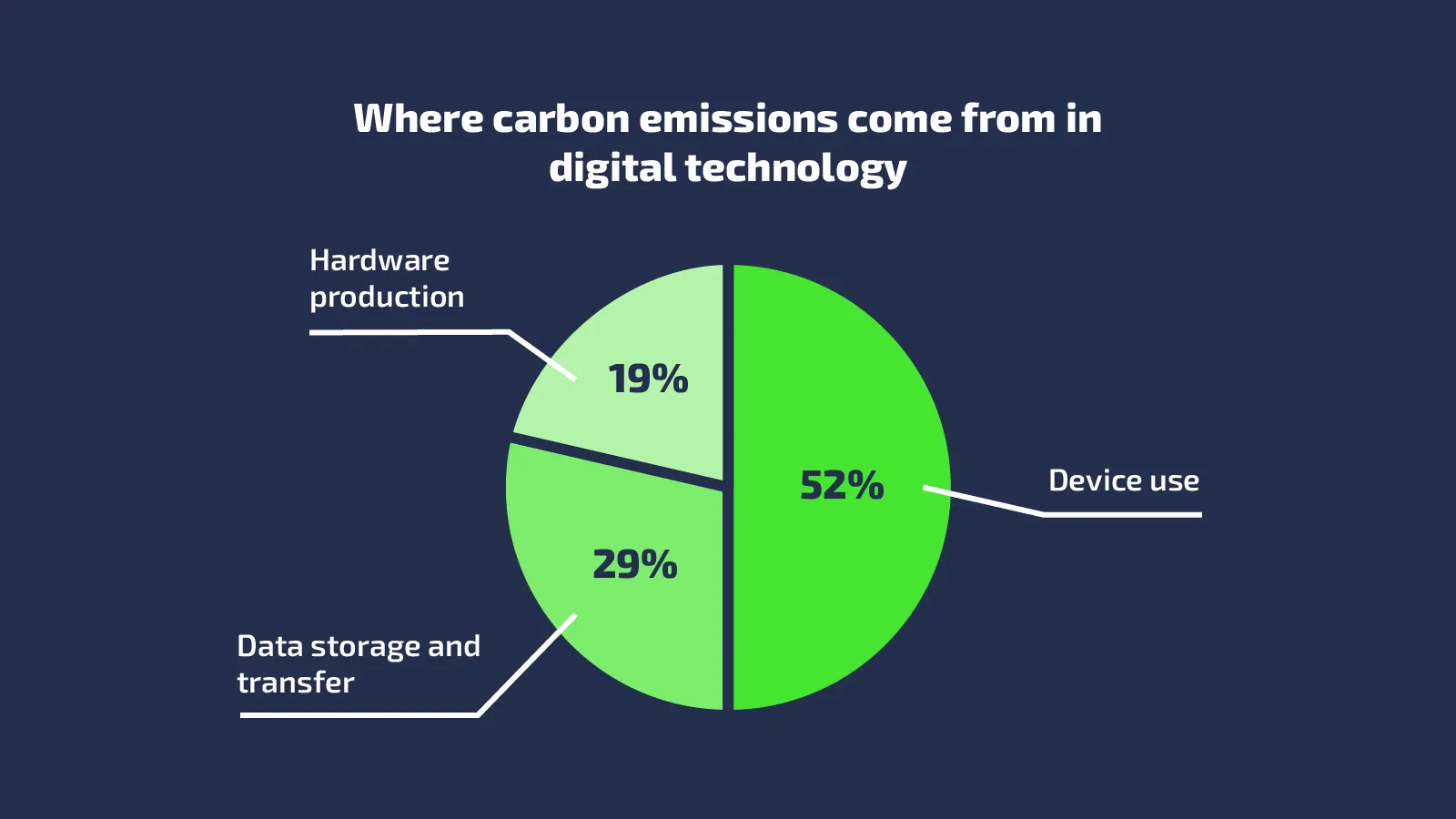 Figure 1: The breakdown of carbon emissions in digital technology (Source: The Greenwise Agency Internal Research, 2025).
The Drivers of Inefficiency
Over the last decade, the average web page size has increased by 300%, yet the information density remains largely unchanged. We are transmitting:
- Heavier Libraries: Massive JavaScript bundles that block the main thread and consume significant CPU cycles.
- Uncompressed Assets: High-resolution images serving 4K pixels to mobile screens where a fraction of that resolution would suffice.
- Redundant Scripts: Third-party trackers and telemetry executing in the background, draining battery life and increasing data transmission costs.
The Business Case for Digital Decarbonization
Beyond the environmental imperative, reducing digital waste is a superior business strategy. The correlation is direct: Sustainable code is performant code. Companies that embrace digital sobriety see immediate benefits in their bottom line.
Strategic Advantages
- Lower Latency: Optimized assets load faster, directly improving Core Web Vitals, conversion rates, and SEO rankings.
- Reduced Hosting & Cloud Costs: Lighter applications require less processing power (CPU), lower bandwidth, and less storage, directly lowering monthly cloud infrastructure bills.
- Regulatory Compliance: With the new EU CSRD (Corporate Sustainability Reporting Directive), companies must report on their Scope 3 emissions—which now include their digital supply chain and operational software efficiency.
- Brand Equity: Demonstrating leadership in digital sustainability aligns with the values of eco-conscious consumers and institutional investors.
Our Methodology: The Zero-Waste Stack
We founded The Greenwise Agency to engineer solutions for this specific problem. We are moving beyond the traditional “Agency” model into a specialized “Infrastructure Partner” role. Our 2025-2026 roadmap targets the three fundamental layers of digital interaction:
1. The Physical Layer (Focus One)
Replacing disposable, energy-intensive paper networking with reusable NFC technology. A single Focus One card replaces approximately 2,000 paper cards in its lifecycle, eliminating the chemical footprint of ink, bleach, and the logistics of global transport.
2. The Logic Layer (CodeGreen)
We don’t just “build websites”; we audit digital ecosystems. Our proprietary CodeGreen algorithm refactors corporate web architecture to minimize energy intensity per session. We focus on streamlining execution paths and optimizing data serialization.
3. The Human Layer (Impact Academy)
Technology is only as green as the people using it. Our Fundae-subsidized training bridges the gap, teaching cross-functional teams to manage cloud resources responsibly and adopt low-carbon digital habits.
The transition to a net-zero economy requires more than planting trees. It requires rewriting the code that powers our world. By optimizing our digital presence, we can create a future where technology serves the planet as much as it serves the user.
Welcome to the era of Sustainable Digital Infrastructure.